Welcome Back

Sign in to your account

Create Account

Join us!

Deep Learning
  • Deep Learning  Subset of Machine Learning

  • Uses Artificial Neural Networks with many sub layers 

  • Inspired by how the human brain and neurons work

  • Can learn directly from raw data like images, audio, or text

  • Does not need manual feature extraction 

  • Can identify complex patterns in large datasets
Deep Learning Circuit Board

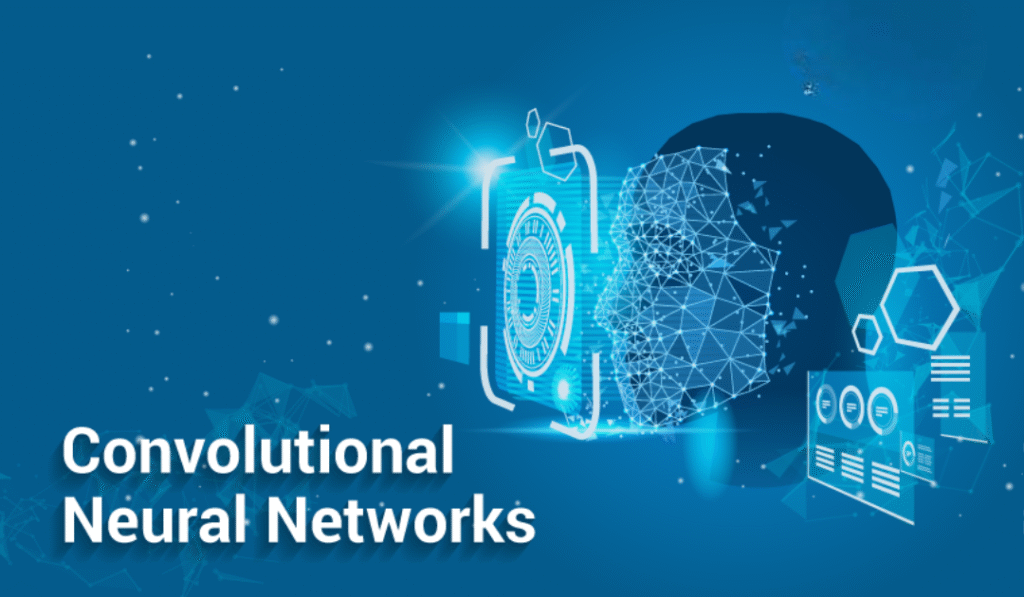
Convolutional Neural Networks (CNNs)

  • CNN  Deep learning model used mainly for classification 

  • Works best with grid-like data (e.g., images – pixels arranged)

  • Uses multiple layers to automatically learn important features

  • Convolutional Layers detect features like edges, shapes, textures

  • Filters/Kernels slide over the image to extract small details

  • Activation functions (like ReLU) add non-linearity to the model

  • Pooling Layers reduce image size and keep important info

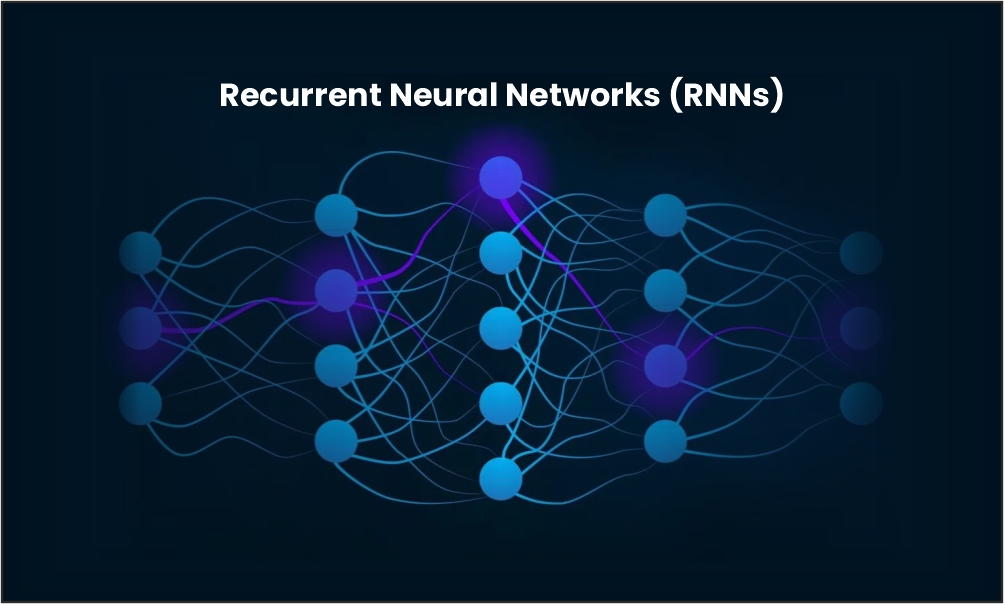
Recurrent Neural Networks (RNNs)

  • RNN = Type of deep learning model for sequential data

  • Best for text, speech, time-series, sensor data, etc.

  • Processes data step-by-step (one time step at a time)

  • Has a built-in “memory” called hidden state

  • Hidden state stores information from previous inputs

  • Uses internal feedback loops to send output back into the model

  • This feedback connection helps RNNs remember previous steps
Deep Learning
Deep learning

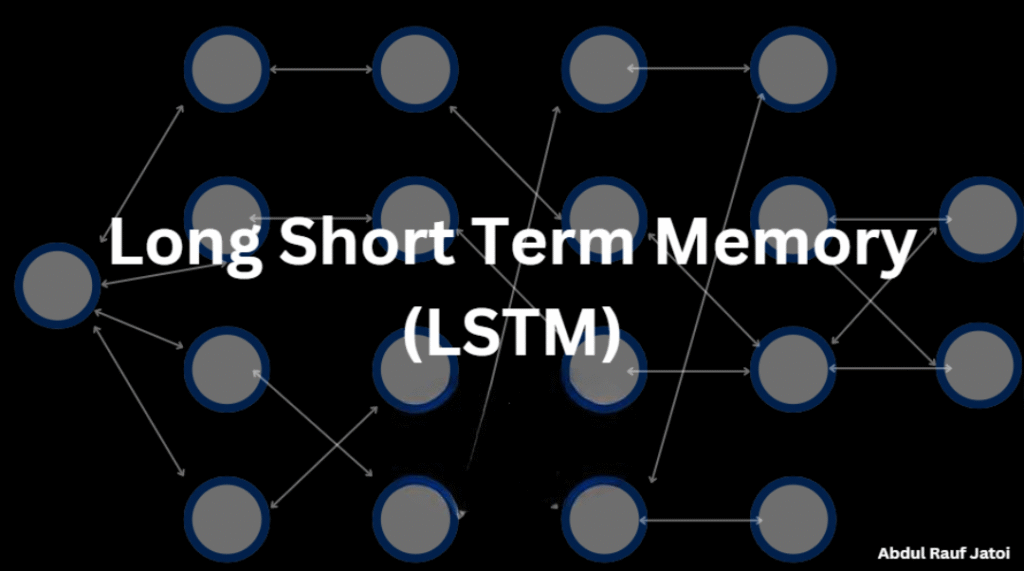
Long Short-Term Memory Networks (LSTMs)

  • LSTM = Special type of Recurrent Neural Network (RNN)

  • Designed to solve the vanishing and exploding gradient problem

  • Normal RNNs forget old information → LSTMs solve this issue

  • Uses feedback loops like RNNs, but with extra memory control

  • Works very well for sequence-based tasks

Generative Adversarial Networks (GANs)

  • GAN = Generative Adversarial Network (a deep learning model)

  • Designed to create new data similar to real training data

  • Works using two neural networks that compete with each other:

    • Generator – Creates fake data (images, audio, etc.)

    • Discriminator – Checks whether the data is real or fake

  • Generator’s goal Fool the discriminator by making realistic data
Deep Learning

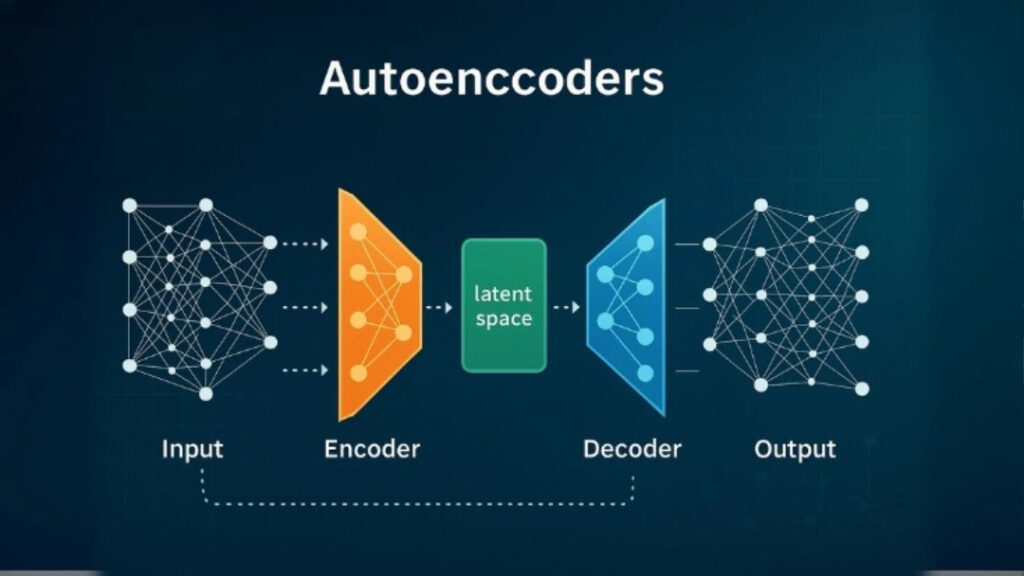
Autoencoders

  • Autoencoder = Unsupervised neural network model

  • Used to compress and reconstruct data

  • Learns to identify the most important features of the data

  • No labeled data is needed (unsupervised learning)

  • Helps in discovering patterns and structure in data
Deep Learning
Essential AI Facts and Concepts

Essential AI Facts and Concepts

Fact #1
AI Can't Think Like Humans (Yet)
Despite impressive capabilities, current AI systems don't truly "understand" like humans do. They process patterns in data through mathematical computations, but lack consciousness, emotions, and genuine comprehension of the world. AI systems rely on statistical relationships and correlations they've learned from vast datasets.
Fact #2
AI Learns From Biased Data
AI systems learn from the data they're trained on. If that data contains human biases - whether related to race, gender, or other factors - the AI will likely perpetuate those biases in its outputs and decisions. For example, if an AI is trained on historical hiring data that favored certain demographics, it may unfairly discriminate against qualified candidates from underrepresented groups.
Fact #3
AI Is Transforming Healthcare
AI is revolutionizing medical diagnosis by analyzing medical images, predicting disease outbreaks, discovering new drugs, and personalizing treatment plans. Some AI systems can now detect certain cancers with accuracy matching or exceeding human radiologists. AI algorithms can analyze thousands of medical scans in seconds, identifying patterns invisible to the human eye.
Fact #4
Most AI Is Narrow, Not General
The AI we use today is "narrow AI" - designed for specific tasks like playing chess, recognizing faces, or translating languages. Artificial General Intelligence (AGI), which could perform any intellectual task a human can, remains a future goal. Each narrow AI excels at its specific function but can't transfer that knowledge to other domains
Fact #5
AI Jobs Are Growing Rapidly
While AI may automate some jobs, it's also creating millions of new positions. Careers in AI development, machine learning engineering, data science, AI ethics, and prompt engineering are among the fastest-growing fields globally. Companies across all industries need professionals who can develop, implement, and manage AI systems.
Fact #6
AI Has Limited Memory and Context
Unlike humans who can remember experiences from years ago and build upon them continuously, most AI systems have restricted memory capabilities. They operate within fixed context windows, meaning they can only process and remember a limited amount of information at once.
AI Assistant
Hi! I'm your AI helper. How can I assist you?
Scroll to Top