Welcome Back

Sign in to your account

Create Account

Join us!

Computer Vision
Computer Vision
  • Computer Vision = Field of AI that helps computers understand image

  • Trains machines to see, interpret, and make decisions from visuals

  • Works by converting images into numerical (pixel) data

  • Uses machine learning, deep learning, and pattern recognition 

  • Can detect and identify objects, faces, shapes, text, etc.

  • Helps in classifying and labeling what the system “sees”

Computer Vision Animation
Detection Tracking Recognition Analysis Segmentation Classification Edge Detection Feature Extract Object Detection Pattern Match Image Filter Contour Morphology Thresholding Histogram Neural Net CNN Deep Learn Pose Estimate YOLO
Computer Vision

Object detection

    • Object detection = Computer vision technique

    • It can identify objects and locate their position in images 

    • Works by drawing a bounding box around each detected object

    • Also assigns a class label (e.g., car, person, dog) to each object

    • Helps computers  what and where objects are in a scene

    • Combines classification + localization in one process

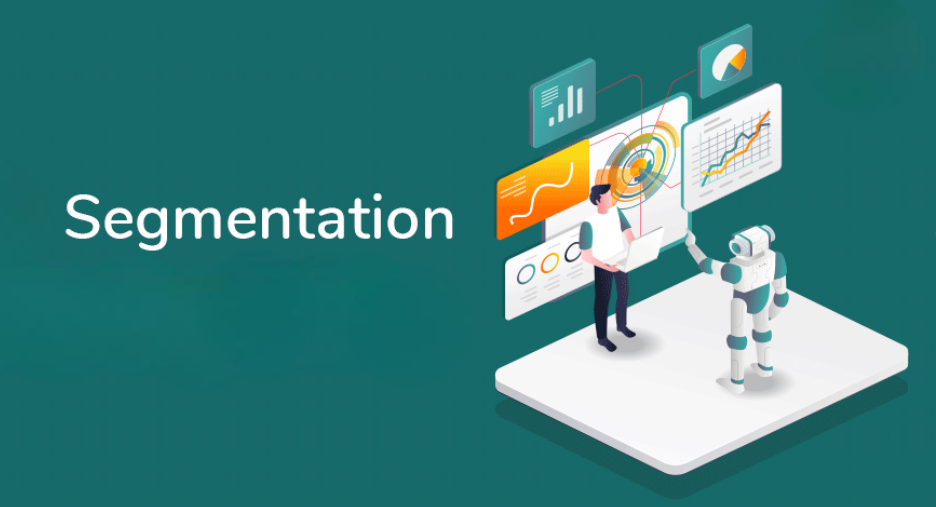
Segmentation

    • Segmentation means dividing a large group into smaller groups

    • Each group has similar or common characteristics

    • Makes it easier to understand, manage, or target the groups

    • Marketing: Dividing customers based on age, income, interests.

    • Operating Systems: Splitting a program into memory segment.

    • Biology: Dividing an animal’s body into repeated segments
Computer Vision
Computer Vision

Classification

    •  Sorting or grouping items based on shared features or rules

    • It is used to organize objects, data, organisms, or information

    • Each group is called a class or category

    • It helps in easy understanding, searching, and decision-making

    • Can be used for living things, emails  images, documents, etc.

Essential AI Facts and Concepts

Essential AI Facts and Concepts

Fact #1
AI Has Limited Memory and Context
Unlike humans who can remember experiences from years ago and build upon them continuously, most AI systems have restricted memory capabilities. They operate within fixed context windows, meaning they can only process and remember a limited amount of information at once. When you have a long conversation with an AI chatbot, it might forget earlier parts of the discussion because information exceeds capacity.
Fact #2
AI Is Not Self-Aware
Self-awareness is the ability to recognize oneself as an individual separate from the environment and other beings, and to reflect on one's own thoughts, feelings, and existence. Humans develop self-awareness early in life, recognizing themselves in mirrors and understanding their own mental states. Current AI systems, despite their impressive capabilities, completely lack self-awareness.
Fact #3
Machine Learning Is the Brain Behind AI
Machine Learning is the core technology that powers most modern AI systems. Instead of being manually programmed with specific rules, ML models learn patterns directly from large amounts of data and improve their performance over time without explicit human instruction.
Fact #4
Deep Learning: How AI Actually Thinks
Deep learning is one of the most powerful and transformative branches of artificial intelligence, and it is the technology behind many of the AI breakthroughs we see today. At its core, deep learning uses artificial neural networks that are loosely inspired by the way the human brain is structured.
Fact #5
Natural Language Processing: Teaching Machines to Understand Us
Natural Language Processing, or NLP, is the branch of AI focused on enabling computers to understand, interpret, and generate human language in ways that are both meaningful and useful. Language is incredibly complex - filled with nuances, context, idioms, sarcasm, and cultural references that make it challenging for machines to comprehend.
Fact #6
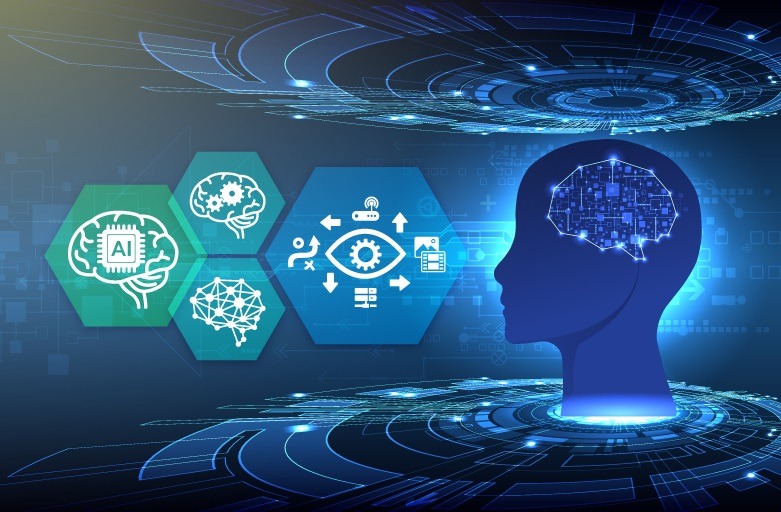
Computer Vision: Teaching Machines to See
Computer Vision is the field of AI that enables machines to interpret and understand visual information from the world, much like human vision does. While humans effortlessly recognize faces, read text, and navigate environments using their eyes, teaching computers to do the same has been one of AI's greatest challenges.
AI Assistant
Hi! I'm your AI helper. How can I assist you?
Scroll to Top