
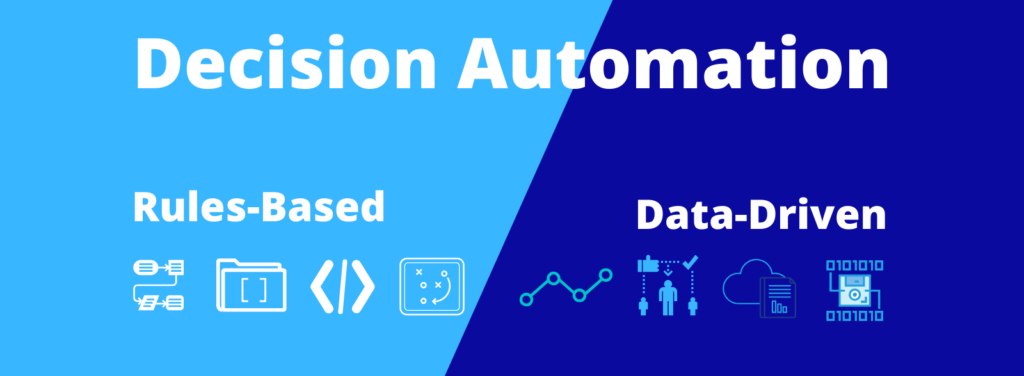
Automating Human Decision Making
What is Decision Automation?
Automating Human Decision leverages artificial intelligence, machine learning, and advanced algorithms to replicate, enhance, or replace human decision-making processes. By analyzing vast amounts of data and identifying patterns, automated systems can make informed decisions faster and more consistently than traditional methods.
This technology represents a fundamental shift in how organizations operate, moving from intuition-based decisions to data-driven strategies. It combines the power of big data analytics, predictive modeling, and real-time processing to deliver outcomes that are both accurate and scalable.
Market Impact & Statistics
Reduction in decision time
Accuracy improvement
Cost savings achieved
Continuous operation
Key Applications
🏦 Financial Services
Automated loan approvals, fraud detection, investment recommendations, and risk assessment that process millions of transactions in real-time. Credit scoring algorithms analyze hundreds of variables instantly to determine creditworthiness.
🏥 Healthcare
Diagnostic assistance, treatment recommendations, patient triage, and resource allocation to improve patient outcomes. AI systems can detect diseases from medical imaging with accuracy matching or exceeding human experts.
🛒 E-Commerce
Personalized product recommendations, dynamic pricing, inventory management, and customer service automation. Machine learning analyzes browsing patterns to predict customer preferences and optimize conversion rates.
🚗 Transportation
Autonomous vehicles, route optimization, traffic management, and logistics planning. Real-time data processing enables vehicles to make split-second decisions while navigating complex environments safely.
🏭 Manufacturing
Quality control, predictive maintenance, supply chain optimization, and production scheduling. Smart sensors and AI algorithms prevent equipment failures before they occur, reducing downtime by up to 50%.
👥 Human Resources
Resume screening, candidate matching, performance evaluation, and workforce planning. AI-powered systems can screen thousands of applications in minutes, identifying top candidates based on skills and cultural fit.
The Automating Human Decision
Data Collection
Gather relevant data from multiple sources including databases, sensors, user inputs, and external APIs.
Data Processing
Clean, normalize, and structure data for analysis using ETL pipelines and preprocessing algorithms.
Model Training
Train machine learning models on historical data to recognize patterns and predict outcomes accurately.
Decision Execution
Apply trained models to new data, generate predictions, and execute automated decisions in real-time.
Monitoring & Learning
Continuously monitor outcomes, collect feedback, and retrain models to improve accuracy over time.
Technologies Powering Decision Automation
Benefits of Automation
Industry Success Stories
Banking Sector
Major banks have implemented AI-driven loan approval systems that reduced processing time from 5 days to under 10 minutes while maintaining fraud detection accuracy above 99%. These systems analyze credit history, transaction patterns, employment data, and hundreds of other variables simultaneously.
Healthcare Institutions
Leading hospitals use automated triage systems that prioritize emergency room patients based on symptoms, vital signs, and medical history. This has reduced wait times by 40% and improved patient outcomes by ensuring critical cases receive immediate attention.
Retail Giants
E-commerce platforms utilize recommendation engines that drive 35% of total revenue by suggesting products based on browsing behavior, purchase history, and similar user profiles. Dynamic pricing algorithms adjust prices in real-time based on demand, competition, and inventory levels.
Manufacturing Leaders
Smart factories deploy predictive maintenance systems that monitor equipment health through thousands of sensors, predicting failures weeks in advance. This has reduced unplanned downtime by 50% and maintenance costs by 30%.
Challenges & Considerations
Algorithmic Bias
Automated systems can perpetuate or amplify existing biases present in training data. Organizations must carefully audit their models for fairness across different demographic groups and implement bias detection mechanisms.
Transparency & Explainability
Many advanced AI models operate as "black boxes," making it difficult to understand how specific decisions are reached. This creates challenges in regulated industries where explanations are required for compliance.
Data Privacy & Security
Decision automation systems often require access to sensitive personal or proprietary information. Organizations must implement robust security measures and comply with regulations like GDPR and CCPA.
Human Oversight
Critical decisions still require human judgment and accountability. Successful implementations maintain appropriate human-in-the-loop mechanisms for oversight, appeals, and intervention when needed.
Change Management
Introducing automation requires cultural shifts within organizations. Employees need training, and workflows must be redesigned to integrate automated decision-making effectively.
The Future Automating Human Decision
As AI and machine learning technologies continue to advance, decision automation will become increasingly sophisticated. Emerging trends include explainable AI that provides transparent reasoning, federated learning that preserves privacy while training models, and edge computing that enables real-time decisions without cloud dependency.
Organizations that embrace decision automation strategically while addressing ethical considerations will gain significant competitive advantages through improved efficiency, accuracy, and scalability. The key to success lies in balancing automation with human judgment, ensuring systems remain accountable, fair, and aligned with organizational values.