
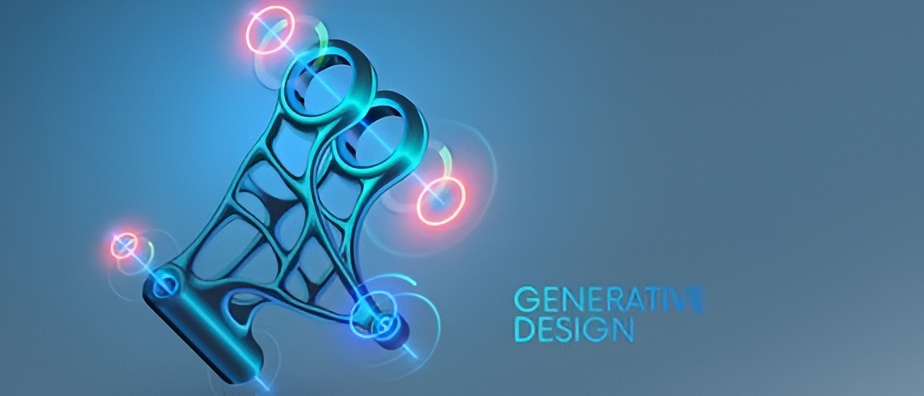
What is Generative Design System?
Generative Design System is an advanced computational approach that uses parametric design AI algorithms, artificial intelligence, and defined constraints to explore thousands of design alternatives automatically. By leveraging the power of machine learning and evolutionary algorithms, it generates optimized solutions that meet specific performance criteria while discovering innovative designs that human designers might never conceive.
Core Features
AI-Powered Exploration
Leverage machine learning algorithms to explore vast design spaces, automatically generating and evaluating thousands of potential solutions based on your defined objectives and constraints.
Multi-Objective Optimization
Balance competing requirements such as cost, performance, aesthetics, sustainability, and manufacturability simultaneously to find optimal trade-offs and Pareto-efficient solutions.
Constraint-Based Generation
Define physical, material, manufacturing, and performance constraints that guide the system toward viable, real-world implementable solutions automatically.
Evolutionary Algorithms
Apply genetic algorithms and evolutionary strategies that mimic natural selection, iteratively improving designs through generations of variation and selection.
Performance Simulation
Integrate structural analysis, thermal simulation, fluid dynamics, and other physics-based evaluations directly into the generation process for accurate performance prediction.
Topology Optimization
Automatically determine the optimal material distribution within a given design space, creating organic, efficient structures that maximize strength while minimizing weight.
Design Principles
Goal-Oriented Generation
Define clear objectives and let the system explore solutions that best achieve your targets while respecting all constraints.
Iterative Refinement
Continuously improve designs through successive generations, learning from each iteration to produce better results.
Data-Driven Decisions
Base design choices on quantifiable performance metrics and simulation results rather than intuition alone.
Sustainable Solutions
Optimize for minimal material usage, energy efficiency, and environmental impact throughout the design process.
Manufacturing Awareness
Consider production methods, tooling requirements, and assembly processes during generation to ensure feasibility.
Human-AI Collaboration
Combine computational power with human creativity and judgment for superior outcomes that neither could achieve alone.
Industry Applications
Architecture & Construction
Design optimized building structures, efficient floor plans, and sustainable facades that balance aesthetics, structural integrity, energy efficiency, and cost constraints.
Aerospace Engineering
Create lightweight, high-strength aircraft components and spacecraft structures that minimize weight while maintaining safety margins and performance requirements.
Automotive Design
Optimize vehicle chassis, body panels, and mechanical components for crash safety, aerodynamics, weight reduction, and manufacturing efficiency simultaneously.
Product Development
Generate consumer products that optimize ergonomics, aesthetics, material usage, and production costs while meeting all functional requirements.
Medical Devices
Design patient-specific implants, prosthetics, and surgical tools that perfectly match individual anatomy while optimizing biocompatibility and functionality.
Urban Planning
Optimize city layouts, transportation networks, and infrastructure placement for efficiency, accessibility, sustainability, and quality of life metrics.
Benefits & Impact
Unprecedented Innovation
Discover non-intuitive, organic designs that challenge conventional approaches and push the boundaries of what's possible, often revealing solutions that human designers would never conceptualize through traditional methods.
Massive Time Savings
Reduce design iteration cycles from weeks or months to hours or days by automating exploration and optimization, allowing teams to evaluate thousands of alternatives in the time it previously took to design one.
Performance Optimization
Achieve superior performance metrics across multiple dimensions simultaneously, creating solutions that are lighter, stronger, more efficient, and more cost-effective than manually designed alternatives.
Material Efficiency
Minimize material usage and waste while maintaining or exceeding structural requirements, leading to significant cost savings and reduced environmental impact across the product lifecycle.
Risk Reduction
Validate designs through integrated simulation before physical prototyping, identifying potential failures and performance issues early in the development process when changes are least expensive.
GENERATIVE DESIGN SYSTEMS
Algorithms That Architect Infinite Aesthetic Realities
What are GDS?
Generative Design Systems use parametric algorithms, rules, and constraints to automatically produce infinite design variations — replacing manual creation with intelligent, adaptive generation.
- Parametric Rules: Constraints drive infinite variety
- Algorithmic Aesthetics: Mathematical beauty
- Adaptive Output: Responds to context & input
- Design Automation: Reduce manual iteration
- Emergent Patterns: Complexity from simplicity
Design Systems
Six live generative algorithms in the canvas above:
- Voronoi: Organic spatial cell partitioning
- L-System: Recursive fractal plant structures
- Mandala: Symmetrical radial geometry
- Flow Field: Perlin noise vector streams
- Grid Morph: Parametric grid deformation
- Noise Mesh: 3D surface displacement maps
Industry Uses
Transforming design across every creative domain:
Parametric Adaptive- Architecture: Optimised structural forms
- Product Design: Topology-optimised parts
- Branding: Dynamic identity systems
- Fashion: Algorithmic textile patterns
- Game Dev: Procedural world building
- Typography: Variable generative fonts
- UI Systems: Token-driven design systems
AI Capabilities
Intelligent features powering next-gen design:
- Constraint Solving: Optimise within parameters
- Style Coherence: Maintain visual language
- Multi-Objective: Balance form, function, beauty
- Evolutionary Search: Genetic design mutation
- Human-in-Loop: Guided creative refinement
- Export Ready: SVG, CAD, shader output
- Real-Time Preview: Instant design feedback