

Welcome Back

Sign in to your account

Create Account

Join us!

Storage

Storage

Storage
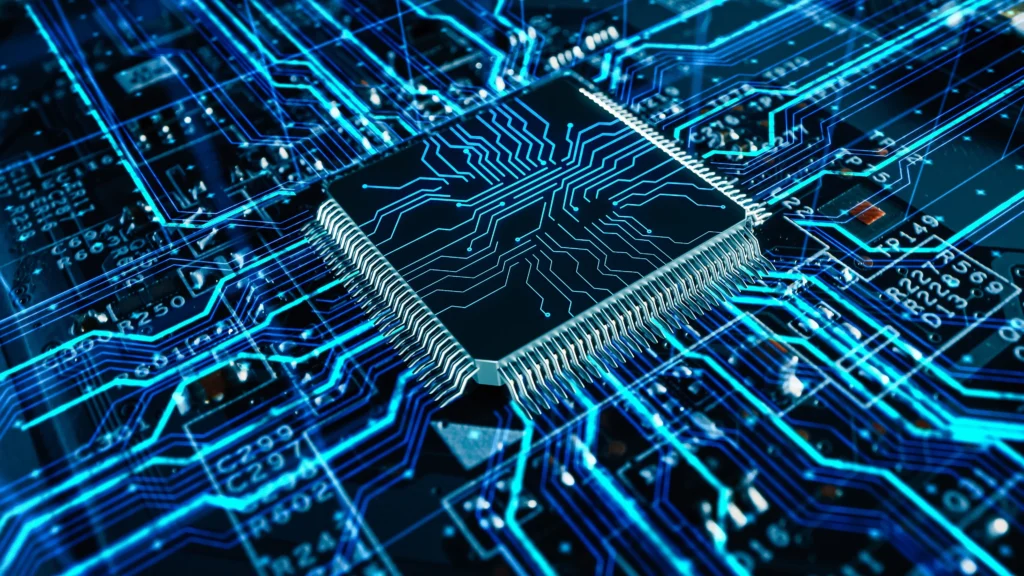
  • AI-enabled storage units store information and instructions for intelligent processing.

  • The storage device is a key part of computer hardware supporting AI computation.

  • Stores data for AI-driven computational tasks and model results.

  • Essential for a computer or AI system to run or boot up efficiently.

  • Used for storing, transferring, or retrieving AI training data and other files.

  • Can store data temporarily (RAM) or permanently (HDD/SSD) for AI algorithms and analytics.

AI Database Architecture
AI
VECTOR
STORAGE
KNOWLEDGE
BASE
TRAINING
DATA
MODEL
REGISTRY
CACHE
LAYER
ANALYTICS
DB
  • Function:
    Memory cards are small, portable, and non-volatile storage devices used to store and transfer AI datasets, model parameters, and inference results efficiently.

  • Technology:
    They use flash memory—a type of storage that retains data even when the power is off—ideal for AI edge devices that require quick, low-power access to trained model data.

  • External Storage Devices:
    These are physical storage options similar to a computer’s built-in memory but removable and connectable to other devices. Such devices often store AI models, training data, and sensor inputs for use across multiple AI systems.
Storage
Storage
  • SSD (Solid-State Drive) is a type of computer storage device widely used in AI systems.

  • Uses non-volatile flash memory to store large AI datasets, model parameters, and inference outputs efficiently.

  • Replaces traditional hard disk drives (HDDs) in AI computers for faster data access and model loading.

  • Performs the same basic functions as a hard drive but delivers higher speed, reliability, and low latency, which are essential for AI model training and real-time analytics.

Essential AI Facts and Concepts

Essential AI Facts and Concepts

Fact #1
AI Has Limited Memory and Context
Unlike humans who can remember experiences from years ago and build upon them continuously, most AI systems have restricted memory capabilities. They operate within fixed context windows, meaning they can only process and remember a limited amount of information at once. When you have a long conversation with an AI chatbot, it might forget earlier parts of the discussion because the information exceeds its memory capacity.
Fact #2
AI Is Not Self-Aware
Self-awareness is the ability to recognize oneself as an individual separate from the environment and other beings, and to reflect on one's own thoughts, feelings, and existence. Humans develop self-awareness early in life, recognizing themselves in mirrors and understanding their own mental states. Current AI systems, despite their impressive capabilities, completely lack self-awareness. They don't "know" that they exist, have no sense of self, and cannot reflect on their own operations in a conscious way. When an AI refers to itself using.
Fact #3
Machine Learning Is the Brain Behind AI
Machine Learning is the core technology that powers most modern AI systems. Instead of being manually programmed with specific rules, ML models learn patterns directly from large amounts of data and improve their performance over time without explicit human instruction. There are three main types of machine learning. Supervised learning works like a student studying with an answer key - the model trains on labeled data to learn the correct outputs.
Fact #4
Deep Learning: How AI Actually Thinks
Deep learning is one of the most powerful and transformative branches of artificial intelligence, and it is the technology behind many of the AI breakthroughs we see today. At its core, deep learning uses artificial neural networks that are loosely inspired by the way the human brain is structured.
Fact #5
Natural Language Processing: Teaching Machines to Understand Us
Natural Language Processing, or NLP, is the branch of AI focused on enabling computers to understand, interpret, and generate human language in ways that are both meaningful and useful. Language is incredibly complex - filled with nuances, context, idioms, sarcasm, and cultural references that make it challenging for machines to comprehend. NLP combines linguistics, computer science, and machine learning to bridge the gap between human communication and computer understanding.
AI Assistant
Hi! I'm your AI helper. How can I assist you?
Scroll to Top