
🧠 Artificial Intelligence (AI) Definition:
Artificial Intelligence (AI) refers to the ability of machines or computer systems to perform tasks that typically require human intelligence. These tasks include learning, reasoning, problem-solving, understanding language, perceiving the environment, and even making decisions.
✅ Key Features of AI:
Learning: Acquiring knowledge from data or experience (Machine Learning)
Reasoning: Making decisions or solving problems
Perception: Interpreting sensory input (vision, sound, etc.)
Natural Language Processing: Understanding and generating human language
Autonomy: Acting independently to achieve goals
🧭 Artificial Intelligence (AI) Principles:
AI Principles are a set of ethical guidelines and design philosophies meant to ensure that Artificial Intelligence is developed and used responsibly, safely, and fairly. These principles guide researchers, developers, companies, and governments in creating AI systems that are beneficial to humanity.1. 🤝 Fairness AI systems should treat all people equally, without bias based on race, gender, age, or background. Ensure non-discrimination Detect and correct algorithmic bias
2.🔒 Privacy & Data Protection AI should respect users’ privacy and safeguard personal data. Collect only necessary data Use encryption and anonymization Comply with regulations (e.g., GDPR)
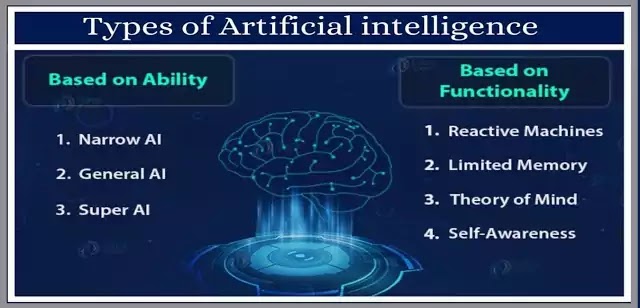
Based on Capabilities
🧠Narrow AI (Weak AI) Definition: AI systems designed to perform a specific task or a limited set of tasks. Examples: Facial recognition, internet searches, and self-driving cars. Limitations: Cannot learn or perform tasks beyond its programmed capabilities.💡 General AI (Strong AI) Definition: AI systems with cognitive abilities similar to humans, capable of learning, reasoning, and problem-solving across various tasks. Examples: Currently, AGI is largely a theoretical concept, but research is ongoing to develop systems with human-level intelligence. Potential: AGI could revolutionize various fields, including science, technology, and medicine.
🚀 Super AI Definition: AI systems that surpass human intelligence in all aspects. Examples: While purely speculative, Super AI could have capabilities beyond human comprehension.Potential: Super AI could lead to advancements in solving global challenges, but also raise ethical concerns.
AI based on Functionality:
Reactive Machines: These AI systems respond to stimuli in real-time, without any memory or ability to learn from past experiences.
Limited Memory AI: These AI systems can store and use past experiences to inform future actions, but their memory is limited.
Theory of Mind AI: These AI systems can understand and respond to human emotions, and reason about the mental states of others.
Reactive Machines: This is the most advanced form of AI, envisioned as having a sense of self, consciousness, and potentially even human-level intelligence.
AI Tools
🧠 ChatGPT Conversational AI that generates human-like responses to questions and prompts.🌐 DeepL AI-powered translator known for accurate and natural language translations.
✍️ Grammarly Improves writing by checking grammar, punctuation, and clarity using AI.
🎧 Descript AI audio/video editor that lets you edit media by editing text.
🧾 Writesonic Copywriting AI for blog posts, SEO content, ads, and more.
🖼️ Remove.bg Automatically removes backgrounds from images using AI — great for quick photo editing.