Deep Learning Subset of Machine Learning
Uses Artificial Neural Networks with many sub layers
Inspired by how the human brain and neurons work
Can learn directly from raw data like images, audio, or text
Does not need manual feature extraction
Can identify complex patterns in large datasets
Convolutional Neural Networks (CNNs)
CNN Deep learning model used mainly for classification
Works best with grid-like data (e.g., images – pixels arranged)
Uses multiple layers to automatically learn important features
Convolutional Layers detect features like edges, shapes, textures
Filters/Kernels slide over the image to extract small details
Activation functions (like ReLU) add non-linearity to the model
Pooling Layers reduce image size and keep important info
Recurrent Neural Networks (RNNs)
RNN = Type of deep learning model for sequential data
Best for text, speech, time-series, sensor data, etc.
Processes data step-by-step (one time step at a time)
Has a built-in “memory” called hidden state
Hidden state stores information from previous inputs
Uses internal feedback loops to send output back into the model
This feedback connection helps RNNs remember previous steps
Long Short-Term Memory Networks (LSTMs)
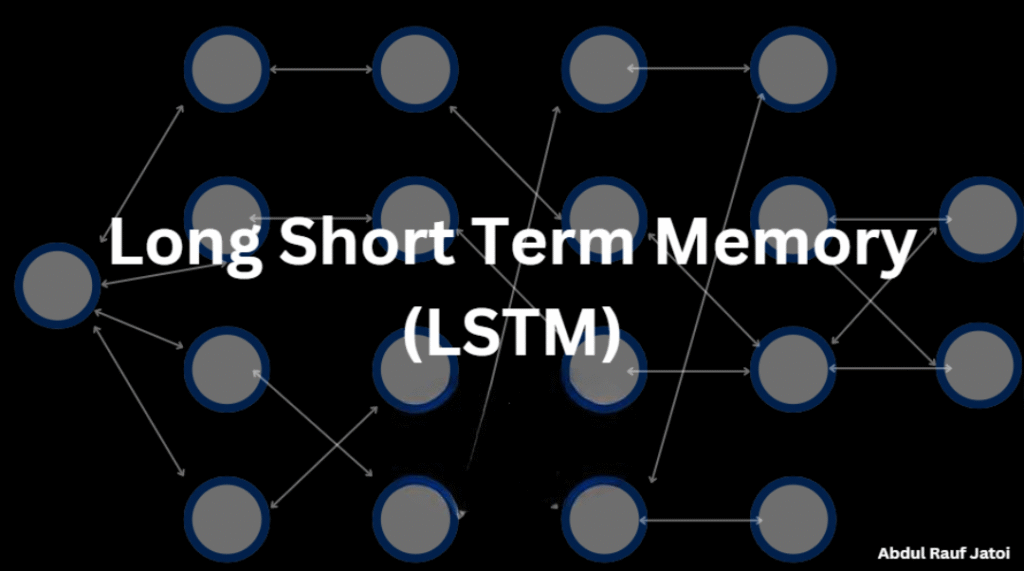
LSTM = Special type of Recurrent Neural Network (RNN)
Designed to solve the vanishing and exploding gradient problem
Normal RNNs forget old information → LSTMs solve this issue
Uses feedback loops like RNNs, but with extra memory control
Works very well for sequence-based tasks
Generative Adversarial Networks (GANs)
GAN = Generative Adversarial Network (a deep learning model)
Designed to create new data similar to real training data
Works using two neural networks that compete with each other:
Generator – Creates fake data (images, audio, etc.)
Discriminator – Checks whether the data is real or fake
Generator’s goal Fool the discriminator by making realistic data
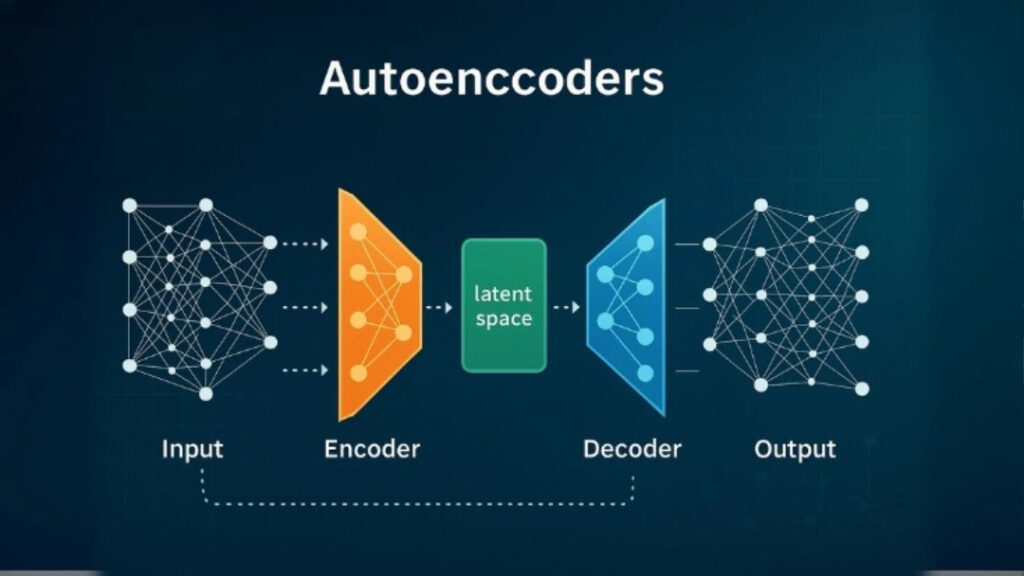
Autoencoders
Autoencoder = Unsupervised neural network model
Used to compress and reconstruct data
Learns to identify the most important features of the data
No labeled data is needed (unsupervised learning)
Helps in discovering patterns and structure in data