

MLOPs
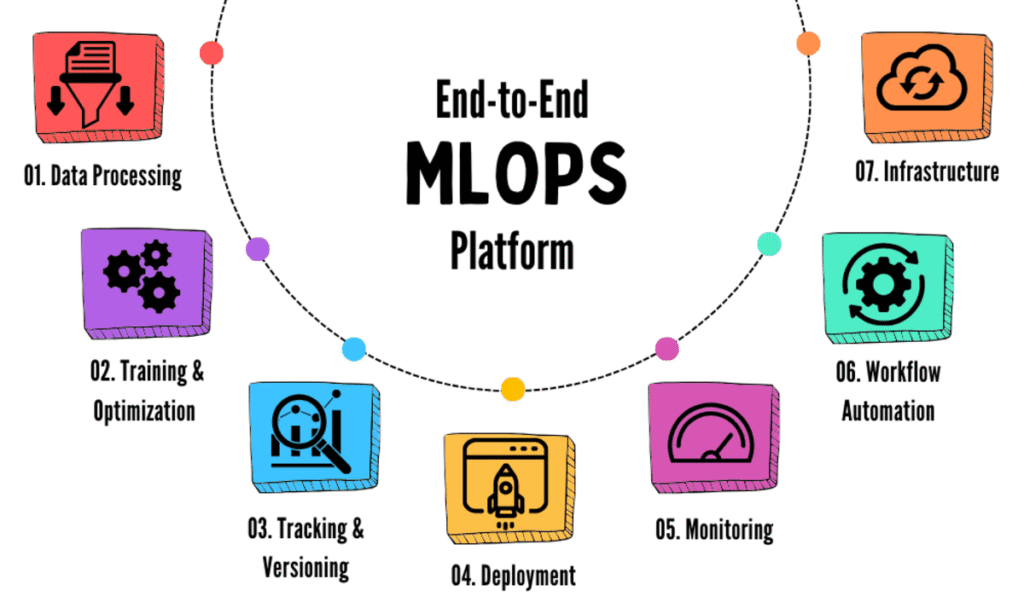
MLOps platforms manage and automate the entire ML lifecycle.
Cover stages from development to deployment and monitoring.
Examples: Amazon SageMaker, Azure Machine Learning, MLflow, Kubeflow, Databricks, Vertex AI.
Enable collaboration among data science and engineering teams.
Automate experiment tracking and model versioning.
Streamline model deployment and performance monitoring.
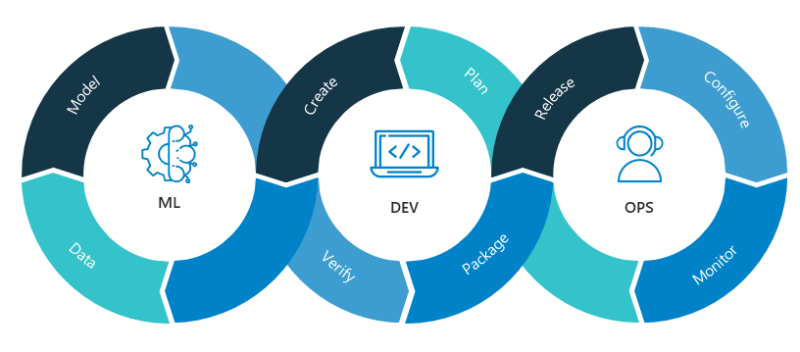
Data Prep
Develop
(Re)Train
EDA
Review
Deploy
Inference
Monitor
ML
OPS
Involves tracking changes in machine learning assets.
Ensures results can be reproduced and previous versions restored if needed.
Every ML training code or model undergoes a code review phase.
All assets are versioned for reproducibility and auditability.
Essential AI Facts and Concepts
Fact #1
AI in Development and Coding
AI is transforming software development by assisting programmers with code generation, debugging, and optimization. Tools like GitHub Copilot, ChatGPT, and Claude can write entire functions, explain complex code, fix bugs, and suggest improvements in real-time. These AI coding assistants understand multiple programming languages and can translate code between them, generate documentation, and even help beginners learn programming concepts. Developers use AI to automate repetitive tasks, speed up development cycles, and catch errors early. However, AI-generated code still requires human review for security, efficiency, and accuracy.
Fact #2
General AI Chatbots
AI chatbots are conversational agents powered by natural language processing that can understand and respond to human queries in real-time. Modern chatbots like ChatGPT, Claude, Gemini, and Copilot use large language models to engage in human-like conversations, answer questions, provide recommendations, and assist with various tasks. They're used in customer service to handle inquiries 24/7, in education to tutor students, in healthcare to provide preliminary medical information, and in personal productivity to help with writing, planning, and research. Unlike rule-based chatbots of the past, AI chatbots can understand context, handle complex queries, and adapt their responses based on conversation flow. However, they can sometimes provide incorrect information, lack real-time data without web access, and don't truly understand emotions or build genuine relationships.
Fact #3
AI for Protection and Business
AI plays a critical role in cybersecurity and business operations, protecting organizations from threats while optimizing performance. In security, AI detects fraud, identifies malware, monitors network traffic for suspicious activity, and predicts potential cyber attacks before they happen. Financial institutions use AI to flag fraudulent transactions in real-time, saving billions annually. In business, AI automates workflows, analyzes market trends, forecasts sales, optimizes supply chains, and personalizes customer experiences. Companies use AI-powered analytics to make data-driven decisions, reduce costs, and increase efficiency. AI chatbots handle customer support, AI recruiters screen job candidates, and AI assistants schedule meetings and manage tasks. However, businesses must balance AI adoption with data privacy, ethical considerations, and the need for human oversight in critical decisions.
Fact #4
AI in Research and Discovery
AI is accelerating scientific research and discovery across multiple fields, from medicine to space exploration. In drug discovery, AI analyzes millions of molecular compounds to identify potential treatments, reducing development time from years to months. AI helps scientists predict protein structures, understand climate patterns, and discover new materials. Machine learning models process vast amounts of research data to identify patterns and correlations that humans might miss. AI-powered research assistants can summarize scientific papers, suggest relevant studies, and even generate hypotheses for testing. In astronomy, AI analyzes telescope data to discover new planets and galaxies. Researchers use AI to simulate complex systems, optimize experiments, and validate theories. While AI can't replace human creativity and intuition in research, it's becoming an invaluable tool for accelerating innovation and solving complex problems.
Fact 5
AI and Data Storage
AI systems require massive amounts of data storage to function effectively. Training a single large language model can require petabytes of data - equivalent to millions of high-resolution photos or thousands of hours of video. Companies invest heavily in cloud infrastructure and data centers with advanced storage systems to handle AI workloads. AI also helps optimize storage itself by compressing data, predicting storage needs, managing backups, and organizing information efficiently. Vector databases store AI embeddings for semantic search and retrieval. Data warehouses use AI to classify and tag information automatically. However, the explosive growth of AI has created challenges around storage costs, energy consumption, and data management. Organizations must balance the need for large datasets with practical limitations of storage capacity and budget.
Fact #6
AI Software Frameworks
AI development relies on powerful software frameworks and libraries that simplify building machine learning models. TensorFlow and PyTorch are the most popular frameworks, offering tools for creating, training, and deploying neural networks. Keras provides a user-friendly interface for beginners, while scikit-learn handles traditional machine learning algorithms. Hugging Face Transformers makes it easy to use pre-trained language models. These frameworks handle complex mathematical operations, GPU acceleration, and model optimization automatically. Developers can build AI applications faster by leveraging pre-built components, datasets, and model architectures. Cloud platforms like AWS, Google Cloud, and Azure offer AI services that integrate with these frameworks. The open-source nature of most AI frameworks has democratized AI development, allowing anyone to experiment and innovate.
Fact #7
AI Orchestration
AI orchestration refers to coordinating multiple AI models, systems, and workflows to work together seamlessly. As AI applications become more complex, they often require multiple specialized models to collaborate - for example, one model for speech recognition, another for language understanding, and a third for generating responses. Orchestration platforms like Kubernetes, Apache Airflow, and MLflow manage these complex pipelines, handling model deployment, scaling, monitoring, and version control. They ensure AI models receive the right data at the right time, manage resource allocation, and handle failures gracefully. AI orchestration is crucial for enterprise applications where multiple AI services must work together reliably. It enables automated workflows, A/B testing of different models, and smooth transitions when updating AI systems without disrupting services.
Fact #8
MLOps: DevOps for Machine Learning
MLOps (Machine Learning Operations) is the practice of managing the entire lifecycle of machine learning models in production environments. Similar to DevOps for software development, MLOps combines development, deployment, and operations to ensure AI models run reliably and efficiently. It involves automating model training, testing, deployment, monitoring, and retraining when performance degrades. MLOps practices include version control for datasets and models, continuous integration and deployment pipelines, automated testing for model accuracy, and monitoring for data drift. Tools like MLflow, Kubeflow, and Weights & Biases help teams track experiments, reproduce results, and manage model deployments. MLOps ensures AI systems remain accurate over time, scale efficiently, and can be updated without downtime. Without proper MLOps, AI models can fail silently, produce incorrect results, or become obsolete as data patterns change.