

Software Frameworks
A structured approach for AI software development
Defines steps, tasks, and activities in the AI development process
Provides a foundation for AI-based software engineering
Guides the development team through AI project stages systematically
Assists in AI project planning, risk management, and quality assurance
Details the chronological order of actions for efficient AI workflow
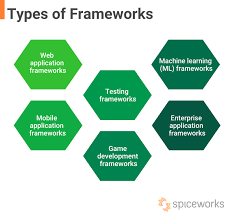
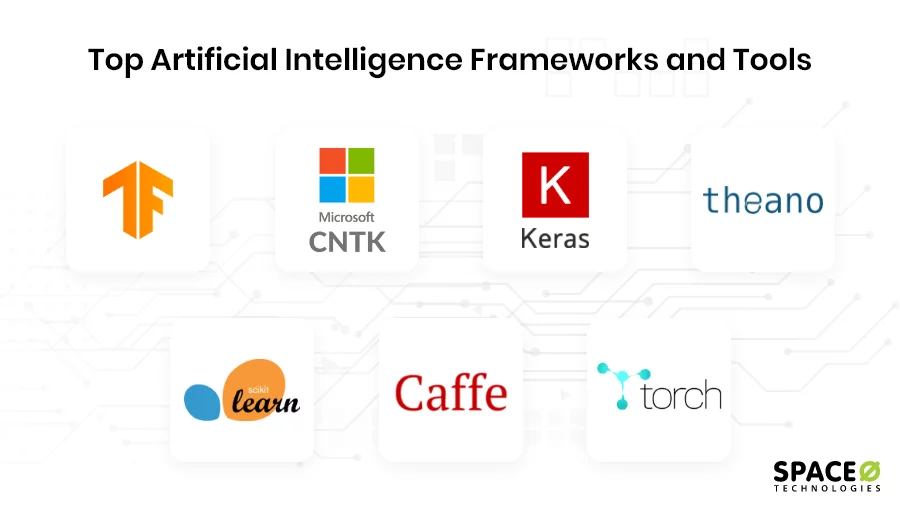
Collection of tools and libraries for building AI applications
Simplifies and standardizes AI development
Provides pre-built AI components and reusable code
Includes tools for training, testing, and deploying AI models
Supports neural networks and complex AI algorithms
Reduces development time and resource usage
Essential AI Facts and Concepts
Fact #1
AI Has Limited Memory and Context
Unlike humans who can remember experiences from years ago and build upon them continuously, most AI systems have restricted memory capabilities. They operate within fixed context windows, meaning they can only process and remember a limited amount of information at once. When you have a long conversation with an AI chatbot, it might forget earlier parts of the discussion because the information exceeds its memory capacity. AI doesn't form lasting memories or learn from individual interactions the way humans do - each session is largely independent unless specifically designed otherwise. This limitation affects how AI can maintain coherent, personalized interactions over time. Current AI models are like having a brilliant expert who can only remember the last few pages of a conversation.
Fact #2
AI Is Not Self-Aware
Self-awareness is the ability to recognize oneself as an individual separate from the environment and other beings, and to reflect on one's own thoughts, feelings, and existence. Humans develop self-awareness early in life, recognizing themselves in mirrors and understanding their own mental states. Current AI systems, despite their impressive capabilities, completely lack self-awareness. They don't "know" that they exist, have no sense of self, and cannot reflect on their own operations in a conscious way. When an AI refers to itself using "I" or "me," it's simply following programmed language patterns, not expressing genuine self-recognition.
Fact #3
Machine Learning Is the Brain Behind AI
Machine Learning is the core technology that powers most modern AI systems. Instead of being manually programmed with specific rules, ML models learn patterns directly from large amounts of data and improve their performance over time without explicit human instruction. There are three main types of machine learning. Supervised learning works like a student studying with an answer key - the model trains on labeled data to learn the correct outputs. Unsupervised learning operates without labels, finding hidden patterns and groupings within data on its own. Reinforcement learning trains models through trial and error, rewarding good decisions and penalizing bad ones, similar to how we teach pets new tricks.
Fact #4
Deep Learning: How AI Actually Thinks
Deep learning is one of the most powerful and transformative branches of artificial intelligence, and it is the technology behind many of the AI breakthroughs we see today. At its core, deep learning uses artificial neural networks that are loosely inspired by the way the human brain is structured. These networks are made up of layers of thousands or even millions of interconnected nodes, each one mimicking how a single neuron in the brain processes information. The first layer receives raw input, such as an image or a sentence, and each subsequent layer extracts increasingly complex and abstract features from that data. For example, when recognizing a face, the first layer might detect simple edges and shapes, the next layer combines those into facial features like eyes and nose, and the deeper layers piece everything together to identify the full face.
Fact #5
Natural Language Processing: Teaching Machines to Understand Us
Natural Language Processing, or NLP, is the branch of AI focused on enabling computers to understand, interpret, and generate human language in ways that are both meaningful and useful. Language is incredibly complex - filled with nuances, context, idioms, sarcasm, and cultural references that make it challenging for machines to comprehend. NLP combines linguistics, computer science, and machine learning to bridge the gap between human communication and computer understanding.
Fact #6
Computer Vision: Teaching Machines to See
Computer Vision is the field of AI that enables machines to interpret and understand visual information from the world, much like human vision does. While humans effortlessly recognize faces, read text, and navigate environments using their eyes, teaching computers to do the same has been one of AI's greatest challenges. Computer vision systems process digital images and videos to extract meaningful information, identify objects, understand scenes, and make decisions based on what they "see." The technology works by breaking down images into pixels and using deep learning algorithms, particularly Convolutional Neural Networks (CNNs), to detect patterns, edges, shapes, and colors at multiple levels of complexity. Modern computer vision has achieved remarkable capabilities. Facial recognition systems can identify individuals with high accuracy, even in crowded spaces or poor lighting conditions.